AI Startup Eyes New York Restaurants With Automated Scheduling
Founder Noah Marbach says managers should spend less time building schedules and more time running their businesses.
By Renee Yu · August 3, 2026 · 8 min read
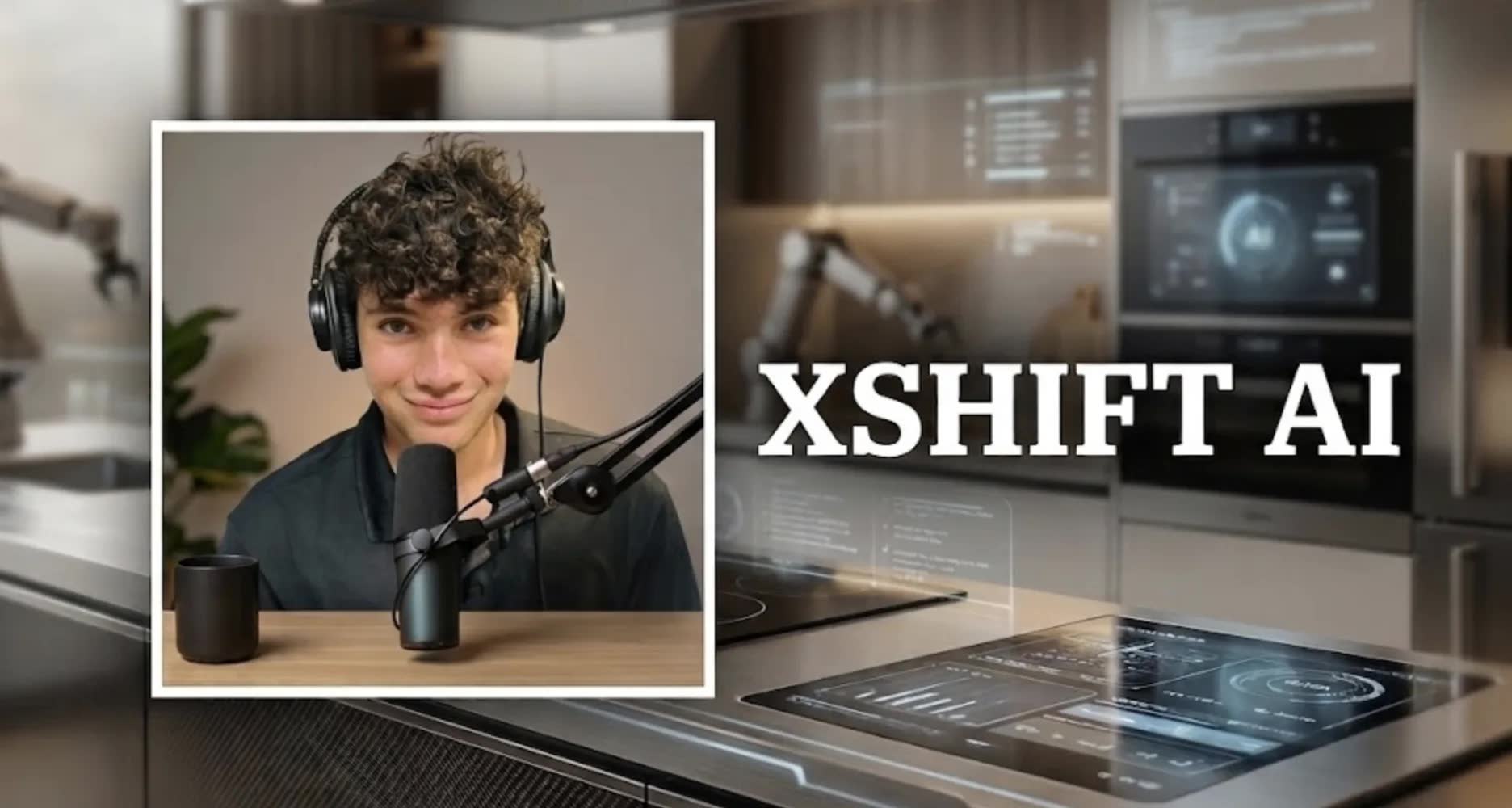
Noah Marbach believes restaurant managers have better things to do than make the schedule.
They should be walking through the dining room, talking to customers and checking whether the kitchen is running properly. Instead, many spend hours assigning shifts while trying to remember who is unavailable, who is approaching overtime, who requested vacation and which employees should not work together.
According to a Paychex survey, more than a third of restaurant leaders spend between 11 and 15 hours each week on administrative work, with scheduling accounting for a meaningful share of that time. Workforce-software companies have spent years trying to make the process easier. Marbach wants to make much of it disappear.
His company, XShift AI, sells software that generates employee schedules according to rules established by an employer. A manager enters staffing needs, labor budgets, employee availability and workplace policies. The system produces a schedule, and the manager reviews it.
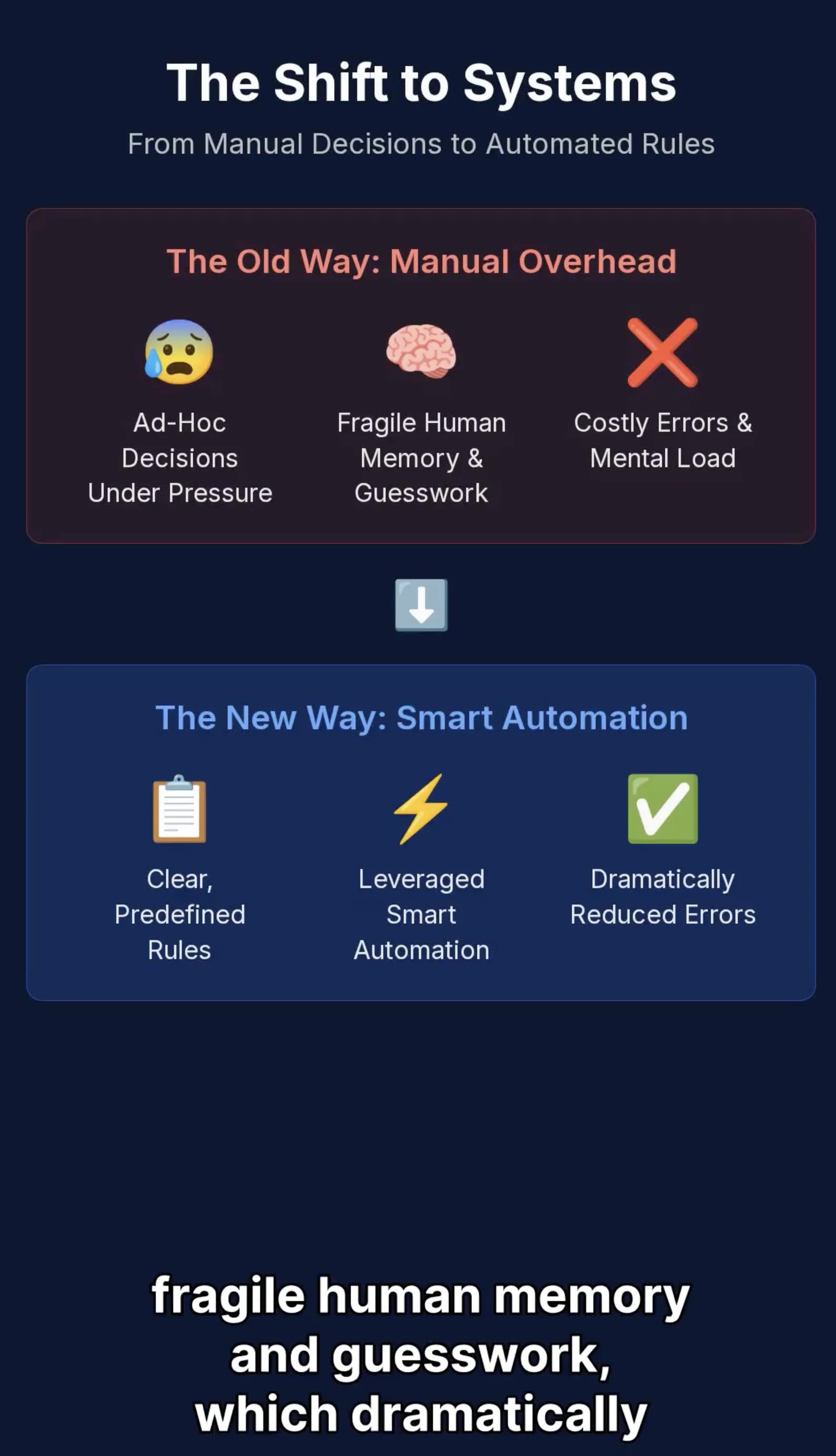
Marbach does not describe that as another scheduling feature. He calls it a shift in the manager's role: the human establishes the rules; the machine carries them out.
Now, as XShift prepares to expand into the New York restaurant market, Marbach believes conversational AI can compete against established workforce-software providers by changing how scheduling decisions are made rather than simply making them faster.
It is an ambitious proposition from any founder. Marbach, who was born in 2007 and launched XShift while still in high school in the Atlanta area, says the company now has thousands of users, serves organizations ranging from small businesses to companies with workforces ranging from about 10 employees to several thousand, and has received investment offers valuing the company in the millions of dollars. The company does not publicly disclose specific revenue figures, the number of paying customers, or valuation details. Marbach said those figures are kept confidential due to business considerations and confidentiality obligations.
Marbach's ambition is easier to quantify. He wants to build a multibillion-dollar company, sell it for a substantial sum and become a billionaire before he turns 27.
Over two hours, we discussed whether AI should make workplace decisions, why he believes established workforce-software companies are vulnerable, what happens when automation replaces employees inside his own company and why, at 18, he is still deciding whether to go to college.
Can AI make workplace decisions?
You say a restaurant manager shouldn’t be making employee schedules. Why not?
Because a restaurant manager should not be spending time on a computer building schedules. The manager should be greeting guests, making sure the food is high quality and running the restaurant.
Scheduling is repetitive. You are validating the same constraints every time: employee availability, reliability, preferences, paid time off, roles, labor budgets, overtime and minimum rest periods. There is no new value created by doing that manually every week.
But making a schedule is also an exercise of managerial judgment. You are deciding who receives hours, who works the unpopular shift and whose request gets accommodated. Is that really repetitive?
The company still determines the policies. The manager tells the AI when employees are available, what the budget is and what custom policies it should follow. The AI enforces those policies so the manager does not have to remember everything every week.
What happens when managers stop reviewing it closely because they become accustomed to accepting what the software produces?
That is why we are developing a schedule log. After the software generates a schedule, the manager will be able to see why every decision happened. It might say that an employee was not assigned because she was on paid time off, or that another person was assigned because he satisfied the necessary constraints.
That explainability is critical to establishing trust.
Explainability tells me why a decision happened. It doesn’t necessarily tell me whether it was a good decision.
The manager always has the ability to override it.
If a company enters a discriminatory policy and your system applies it at scale, where does XShift’s responsibility begin?
The AI only enforces the policies that the company puts into the system. We advise users to apply a standard policy to all employees.
Is warning the customer enough?
Managers remain in control. We do not remove their ability to review or change the result.
If an automated schedule violates a rule or costs a restaurant money, who is responsible?
I’m not going to comment on that.
Why not?
I’m not commenting on legal responsibility or guarantees.
Can a startup beat the incumbents?
What happens if those companies add the same kind of AI tomorrow?
Their architecture is built on older code bases. To do what we are doing, they would have to rewrite their software and restructure how the product works. When you have millions of users, you cannot simply take that risk.
Their businesses are built around assisting managers. Our business is built around managers defining the policies and our system enforcing them. It is not a feature difference. It is a category shift.
Those companies also have customer relationships, distribution, integrations and years of workforce data. Why isn’t that more valuable than starting with newer software?
Those things are advantages. But large companies move slowly. We can take risks and learn from users much faster.
What have you learned that a competitor couldn’t easily copy?
When we launched, we allowed employees to set their own availability. We learned that many restaurants and retailers did not want employees changing it whenever they wanted. They might have hired someone specifically to work Saturday and Sunday nights. We added a setting that gives managers final control.
We also learned about employees having multiple roles. Someone can be an assistant manager but also fill in as a cashier. The AI needs to know that. We didn’t initially understand how important that was.
Every customer gives us more information about what works and what doesn’t.
That sounds like product feedback. Does it constitute a defensible technological advantage?
It becomes defensible because the more people use the product, the more we understand how these businesses actually operate.
You have said XShift has thousands of users. How many are paying customers?
We aren’t disclosing that. New paying users come into the application every day, so the number changes constantly.
An Extremely Small Company
Marbach says XShift has fewer than 10 sales associates, all working as part-time contractors. He has considered hiring engineers, but he also believes his company can avoid much of the staffing once required to build a software business.
He has constructed internal AI agents that perform development and administrative work. He says some people hired by the company were subsequently dismissed because AI could do their jobs.
You argue that XShift gives restaurant managers more time to perform human work. Inside your own company, however, you use AI to employ fewer humans. Are those two visions in conflict?
No. If an AI agent can do something better than an employee, at one ten-thousandth of the cost, and it never gets tired or sick, I’m going to use the AI agent.
I think software companies are going to experience a large number of layoffs. One person will be able to oversee AI agents doing work that previously required 20 or 30 people.
What remains valuable about the person?
Taste. When I build a feature, I need to know whether it is useful, whether it will confuse customers and whether it creates value or just makes the product more complicated. I would not trust AI to make that decision on its own.
Is “taste” enough to support all the people whose work becomes automated?
Knowing how to work with AI will become an important skill. Even communicating effectively with systems such as ChatGPT or Claude will give people an advantage.
You’re describing a future in which fewer people are needed, and then telling displaced workers to become better at using the technology that displaced them.
I’m saying AI does not eliminate every job. It allows one person to oversee much more work. People who learn how to use it will have an advantage.
The confidence with which Marbach describes eliminating work is characteristic of the current AI economy. Founders speak of efficiency; workers experience the same process as insecurity. Both can be accurate descriptions of the same event.
From the Soccer Field to Software
Marbach’s age is the most immediately marketable part of his story, and he knows it. He said early reactions to his company could feel patronizing: People called his venture “cute.” Media coverage helped turn the same fact from a presumed weakness into part of his brand.
He has already been covered by numerous outlets, though he says many never interviewed him. He believes that attention makes customers more willing to trust XShift.
His youth also creates a decision that older founders do not generally face. Marbach has planned to attend the University of Mississippi. Lately, he has wondered why.
Why go to college?
Honestly, I have trouble answering that question. Most college students are focused on grades and finding a job after graduation. I’m focused on scaling a software company. I live in a different world from most college students.
That sounds like an argument for not going.
I committed to attending six or seven months ago. When I make a decision, I usually stick with it. As of now, I still plan to go for my freshman year.
But if XShift had been where it is now when I made that decision, I would have looked at it very differently.
Do you want any part of an ordinary 18-year-old life?
The more XShift grows, the harder that becomes.
What happens if XShift fails?
I’ve already failed. I had two companies before this, and I lost a lot of money. I failed in soccer after injuries. If you put me in a room with a thousand teenagers and asked who had failed the most, I think I would be number one.
If XShift disappeared tomorrow, I believe I could build something else.
Editor’s Note
This is an independently reported and edited journalistic interview. It was not sponsored by XShift AI, and the company did not review or approve the article before publication. Statements concerning XShift’s users, customers, revenue, valuation, product performance and market opportunity are attributed to Noah Marbach unless independently verified.
The interview was edited and condensed for length and clarity. Quotations must be checked against the original recording before publication.
This article is for journalistic and informational purposes only. It does not constitute investment, financial, legal or business advice, or a recommendation concerning any company, security or investment.